


The tannery · Est. 1867
Over 150 years of making leather the slow way.
Wickett & Craig has been tanning leather since 1867. For more than 120 years they worked from their original tannery in Toronto, then moved to Curwensville, Pennsylvania in 1990, where they still make every hide today.
They're the leading North American maker of vegetable-tanned leather for fine leather goods and equestrian gear, and they've never taken the shortcut. Pit tanning, drum dyeing and genuine hot stuffing are still their standard. It takes longer. It's worth it.

English Bridle · Full grain
The leather saddlemakers trust.
English Bridle is Wickett & Craig's most popular leather, and among the finest vegetable-tanned leathers in the world. Each hide is drum dyed, then hot stuffed with waxes that soak deep into the fibers. That's what gives it a smooth, flexible hand and that rich, waxy feel.
The back side is refinished and gum pasted, so even the inside of your cover is smooth to the touch. And the top grain takes a stamp beautifully, which is why your free personalization looks so crisp.

The experience · Patina
No two journals age the same.
Your journal arrives firm, structured and smelling of real leather. Then you start carrying it.
The oils from your hands, a little sun, the bag it rides in and the desk it lives on all leave a mark. The leather softens and molds to the way you hold it. The color deepens. A soft sheen builds where your thumb rests. Light scuffs blend in with a rub of your finger.
Years from now it won't look like anyone else's. It'll look like yours.
Carry it with you
-
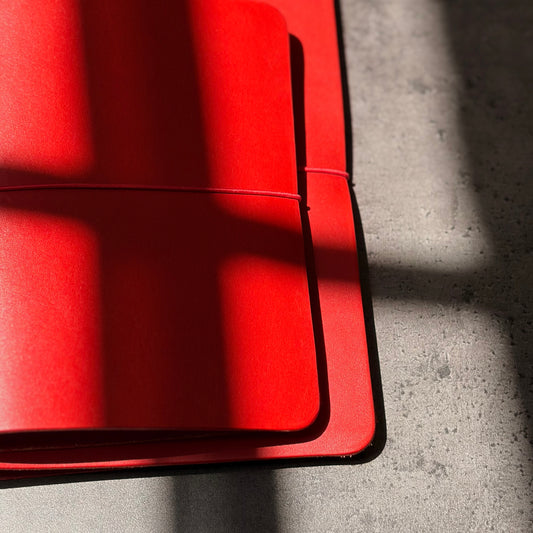
Trifold | Visionary
Regular price From $155.00 USDRegular priceUnit price per$155.00 USDSale price From $155.00 USD -

 Sale
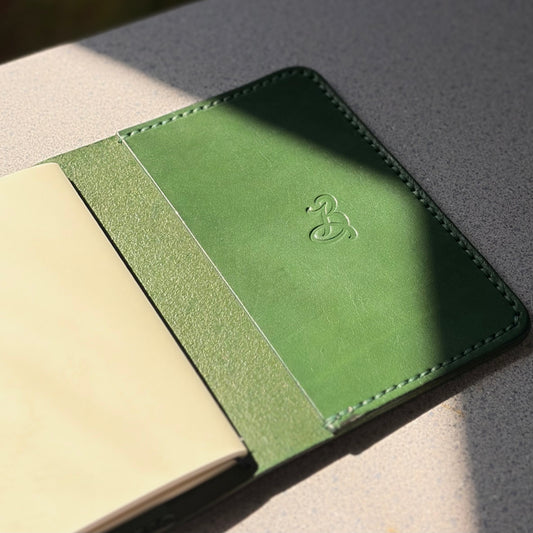
Bifold | Studio
Regular price From $79.00 USDRegular priceUnit price per$90.00 USDSale price From $79.00 USDSale -

 Sale
Bifold | Visionary
Regular price From $120.00 USDRegular priceUnit price per$145.00 USDSale price From $120.00 USDSale -

 Sale
Trifold | Archive
Regular price From $115.00 USDRegular priceUnit price per$140.00 USDSale price From $115.00 USDSale


